

US New Car Prices Hit $49,077 in August 2026 — Tariffs Are Now Your Problem
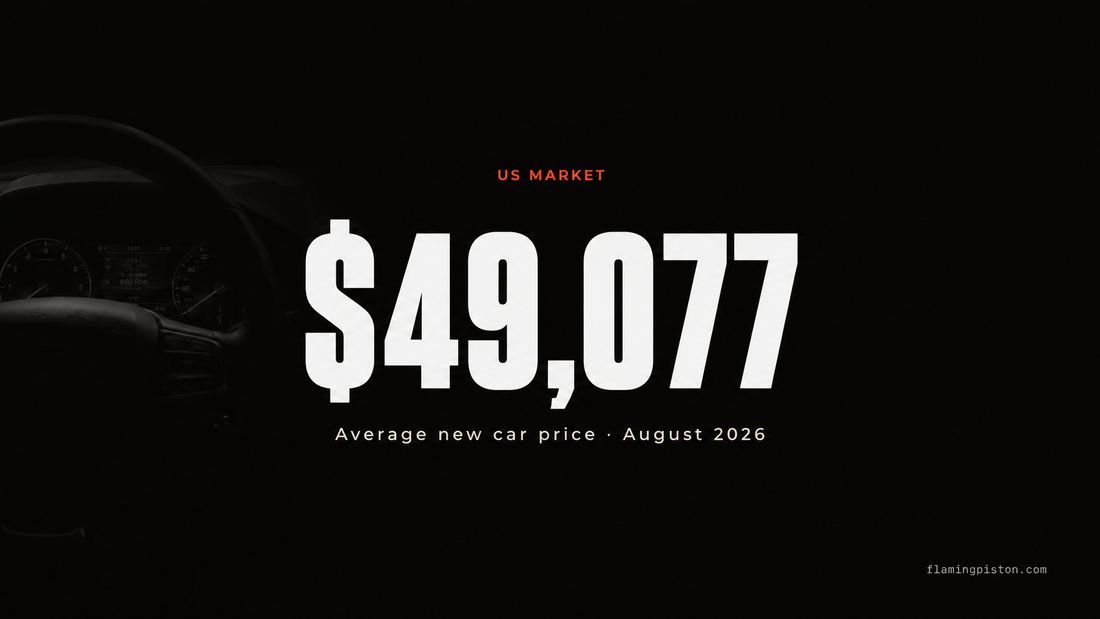
Image: FlamingPiston
The average American spent $49,077 on a new car in August 2026. That number — up from $39,800 in some comparable segments just a year ago — is not an anomaly. It is the new baseline, and it's being driven by a combination of tariff-inflated vehicle costs and a pullback in the dealer discounts that had been quietly absorbing those increases for the past several months.
Put differently: automakers and dealers had been bridging the tariff cost gap through incentives, keeping transaction prices relatively stable even as sticker prices rose. That bridge is now narrowing. The gap between MSRP and what buyers actually pay is closing — not because stickers fell, but because discounts disappeared.
What this means if you're buying now
The calculus depends heavily on what you're buying.
Hybrids are the clearest value play in August 2026. Supply has caught up sufficiently that buyers can now properly cross-shop hybrid models against each other — something that wasn't possible even six months ago when allocation was tight. Manufacturers have also been more willing to incentivise hybrids than ICE vehicles, since hybrid production is generally less tariff-exposed than fully imported ICE models. If you're in the market and don't need to plug in, a hybrid is likely the sharpest deal available right now.
EVs are a different story. The federal $7,500 EV tax credit — which had made many EV purchases competitive against hybrid alternatives — was eliminated by the One Big Beautiful Bill Act in 2025. New EVs are now priced at full sticker without that offset. However, outgoing model-year EV inventory and the used EV market currently represent strong value: dealers are moving prior-year stock with meaningful discounts, and used EV prices have dropped substantially as more vehicles have come off lease. If an EV is on your list, used or outgoing inventory is the smarter purchase right now.
ICE vehicles are taking the full tariff hit with the least cushion. Imports are most exposed, but even domestically assembled vehicles use globally sourced components that have become more expensive. The best advice here is the same as always: shop end-of-month, compare dealer invoice prices, and avoid adding packages you don't genuinely need.
The broader picture
$49,077 as an average transaction price means a very large portion of the market is now above $50,000. A decade ago, the average new car price in the US was approximately $34,000. The $15,000 rise over ten years reflects a combination of longer vehicle lifecycles pushing buyers toward higher trims, shifting consumer preference toward SUVs and trucks over sedans, feature inflation at every price point, and now — most acutely — tariff costs flowing through to sticker price.
The Ram REV electric pickup cancellation is a signal of where some automakers are hedging: rather than absorb the cost of full EV development in a tightening incentive environment, Ram is pivoting to a plug-in hybrid truck instead. More brands are likely to follow a similar logic in the near term — hybrids as the path of least resistance through an uncertain regulatory and cost environment.
Flaming Piston's Take
$49,077 is a number that should give every American car buyer pause before signing anything. The tariff environment isn't going away quickly, dealer incentives are thinner than they've been in years, and the federal EV credit that softened some of those costs is gone. The market is telling buyers something: if you can wait, wait. If you can't, buy hybrid. If you want an EV, buy used or buy outgoing inventory. The worst decision right now is buying a brand-new ICE vehicle at full sticker with no incentives attached, when the hybrid version of the same car offers better long-term economics and is actually more available.
Sources: MikesCarInfo Daily Car News; U.S. News & World Report; Kelley Blue Book; Automotive News.
Back to where you came from