Maruti Baleno Facelift: The Full Price List Is Out, and the CNG Automatic Has a Catch

Image: FlamingPiston
What the Full Price List Actually Reveals
Maruti’s first factory CNG automatic is real, and it is the most significant thing about this facelift. It is also unavailable on the two variants that carry the equipment most people are cross-shopping for. The new three-cylinder engine gives up 7hp and gains meaningful efficiency.
Maruti launched the Baleno facelift on September 5 with a single number — ₹6.10 lakh, introductory, for the base Sigma petrol manual — and then said nothing else about pricing for five days. The full variant list landed today.
It runs from ₹5.99 lakh to ₹9.99 lakh ex-showroom, according to Maruti’s own website. Worth noting that the entry figure now sits below the ₹6.10 lakh launch-day headline, and that other outlets are reporting a top end nearer ₹9.37 lakh. Introductory festive pricing is in play and Maruti has not said how long it lasts, so treat the extremes of that band as provisional.
The Engine Trade Nobody Is Framing Honestly
The K12N 1.2-litre four-cylinder is gone. In its place is the Z12E 1.2-litre three-cylinder already doing duty in the Swift and Dzire.
On paper this is a downgrade. Peak output falls to 83hp and 112Nm, down 7hp and 1Nm. Most coverage is glossing over that, or burying it under the efficiency gain. It deserves stating plainly: the new Baleno is slower than the old one.
What it buys you is real, though.
| Powertrain | Claimed efficiency | Change |
|---|---|---|
| Petrol manual | 23.80 kpl | +1.45 kpl |
| Petrol AMT | 24.77 kpl | +1.83 kpl |
| CNG | 33.61 km/kg | +3.00 km/kg |
A 1.83 kpl improvement on the automatic is not a rounding error, and Maruti says the engine has been retuned for low-end torque specifically for this application. For a car bought overwhelmingly for commuting, trading top-end output for tractability and economy is the correct call. It is still a trade, and buyers upgrading from the outgoing car should know they are making it.
Published outputs do vary between outlets — we have seen 82bhp, 83hp and 89hp quoted for the same engine. We are going with 83hp and 112Nm, which is the figure Autocar India carries and which matches the Swift.
Maruti’s First CNG Automatic — and Where You Can Actually Get It
This is the genuine first. No Maruti passenger car has previously offered a factory-fitted CNG kit with an automatic gearbox. Tata has sold CNG-AMT for years across the Tiago, Tigor, Altroz and Punch; Maruti, which effectively created both the factory-CNG and the mainstream-AMT markets in India, somehow never joined the two. The Baleno finally does.
In CNG form the Z12E produces 70hp and 102Nm.
Here is the part the launch coverage keeps leaving out. The powertrain is not available across the range, and the pattern of what you can and cannot order is the single most useful thing a prospective buyer can know:
| Variant | Petrol MT | Petrol AMT | CNG |
|---|---|---|---|
| Sigma | Yes | No | No |
| Delta | Yes | Yes | Yes |
| Zeta | Yes | Yes | Yes |
| Alpha | Yes | Yes | No |
| Alpha (O) | Yes | Yes | No |
Read that bottom-right corner again. The top two variants have no CNG option at all. If you want the CNG automatic, your choice is Delta or Zeta — which means the Level 2 ADAS suite and the range-topping equipment are off the table in the same order. The base Sigma, meanwhile, is manual-petrol only.
This is the same structural trap we mapped on the Brezza, where the turbo engine and the automatic gearbox cannot be ordered together at any price. If you want the full picture of how Maruti fences off its powertrains, our Brezza variants breakdown works through the identical logic.
One more CNG detail that matters and is barely being reported: the Baleno does not use the underbody CNG tank layout that Maruti has fitted to the Brezza facelift and the Victoris. The cylinder sits in the boot, so the practicality penalty of choosing CNG here is the traditional one. For a comparison of what the underfloor arrangement changes, see our Brezza CNG review.
What the Prices Actually Look Like
The premiums are consistent enough to plan around:
- Petrol AMT: ₹7.50 lakh to ₹9.99 lakh — a ₹50,000 walk over the equivalent manual
- CNG manual: ₹7.92 lakh to ₹8.92 lakh — a ₹92,000 premium over petrol manual
The ₹50,000 for the AMT is the easier of the two to justify, particularly given the automatic is now the more efficient car on paper. The ₹92,000 CNG premium takes roughly 40,000–50,000 km of running to repay at typical Delhi fuel and CNG rates — sensible for a high-mileage commuter, hard to argue for anyone doing under 1,000 km a month.
Level 2 ADAS, in a Premium Hatchback
The headline feature addition is a Level 2 ADAS suite — adaptive cruise control, lane-keep assist, autonomous emergency braking and high-beam assist — which no direct rival currently offers in this segment. It sits on the higher variants rather than across the range.
Six airbags are standard on every trim, alongside ABS with EBD, a 360-degree camera and a newly added tyre-pressure monitoring system. Also new: ventilated front seats, a cooled wireless charger and a branded Clarion audio system.
What has not arrived is as telling. There is still no sunroof, no rear centre armrest, and the Baleno keeps analogue dials with a colour MID between them rather than moving to a digital cluster. In a segment where the sunroof has become a default expectation, that is a deliberate omission rather than an oversight.
Maruti has not published a fresh Bharat NCAP result for the updated car. Six standard airbags and a full ADAS suite are meaningful, but they are active and restraint systems, not a structural score. Our explainer on how Bharat NCAP actually scores a car covers why the two are not interchangeable.
Design
A wider chrome-detailed grille dominates the nose, with the Suzuki emblem repositioned above it and a resculpted bumper below. The NexTRE LED headlight signature and revised LED fog lamps complete the front. The silhouette and proportions are untouched — this is a fascia refresh, not a redesign.
Who It Is Fighting
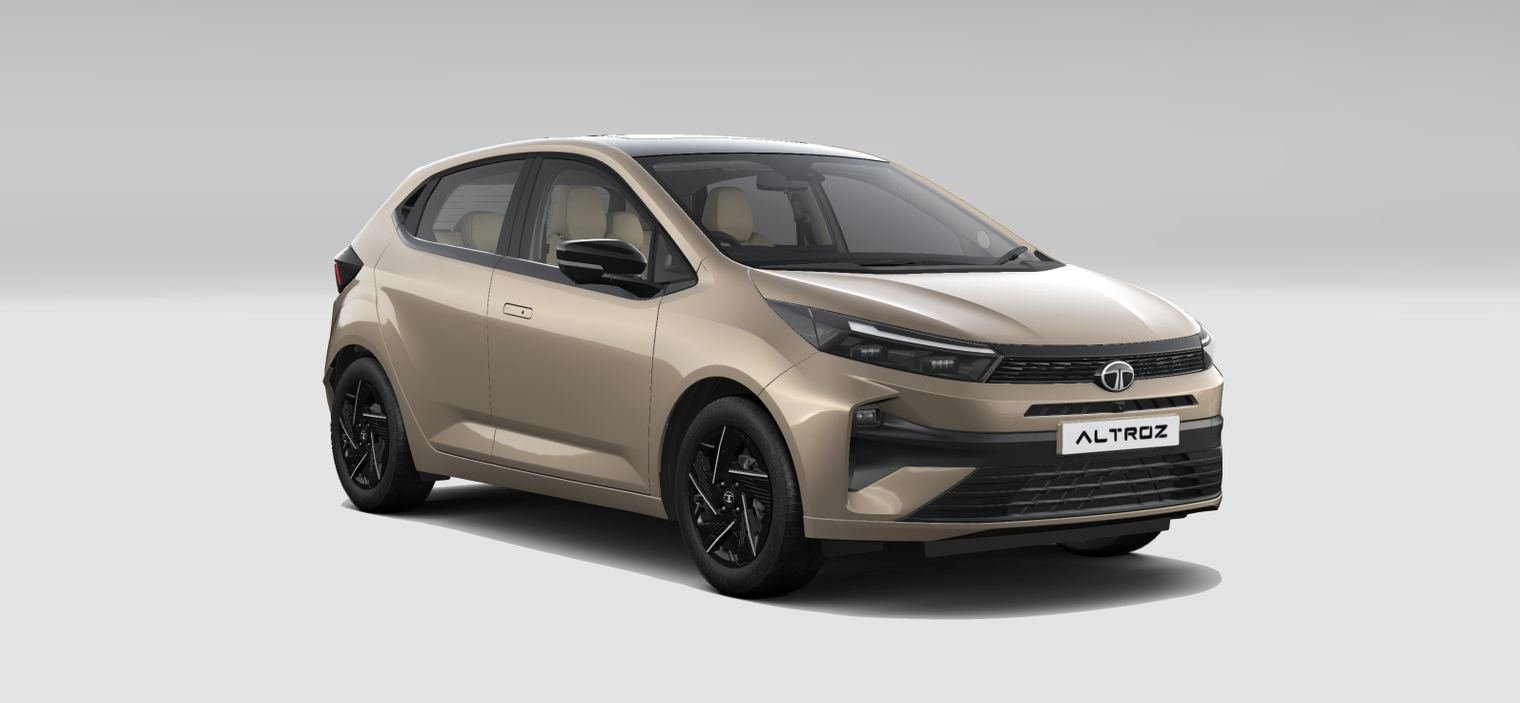
The Hyundai i20, Tata Altroz and Toyota Glanza. The Glanza shares this car’s platform and mechanical package, and Toyota has not yet announced a matching update — which means for the moment the Baleno is meaningfully ahead of its own twin.
Bookings are open at NEXA dealerships and online at ₹11,000.
Flaming Piston's Take
Zeta CNG-AMT is the interesting variant, and it is the one Maruti has quietly made you choose between — you can have the class-leading driver assistance or you can have the CNG automatic, not both. For most buyers that will not matter, because the CNG automatic is the more useful of the two in daily Indian driving. But it is a strange fence to build around your own headline feature.
Frequently asked questions
What is the 2026 Maruti Baleno facelift price?
Maruti’s full price list runs from ₹5.99 lakh to ₹9.99 lakh ex-showroom. The car launched on September 5 at an introductory ₹6.10 lakh for the base Sigma petrol manual, and festive introductory pricing is still in effect.
Does the 2026 Baleno get a CNG automatic?
Yes. The Baleno facelift is the first Maruti Suzuki passenger car to offer a factory-fitted CNG kit with an AMT gearbox. It is available on the Delta and Zeta variants only — the top-spec Alpha and Alpha (O) trims have no CNG option.
What engine does the 2026 Baleno use?
A 1.2-litre Z12E three-cylinder petrol producing 83hp and 112Nm, replacing the previous four-cylinder K12N. That is 7hp less, but claimed efficiency rises to 23.80kpl manual and 24.77kpl AMT. In CNG form it makes 70hp and 102Nm at 33.61km/kg.
Does the Baleno facelift have ADAS?
Yes. Higher variants get a Level 2 ADAS suite including adaptive cruise control, lane-keep assist, autonomous emergency braking and high-beam assist — currently not offered by any direct rival in the segment.
Does the 2026 Baleno get a sunroof?
No. The facelift adds ventilated front seats, a cooled wireless charger, a Clarion audio system and TPMS, but a sunroof and a rear centre armrest remain unavailable, and the car retains analogue dials rather than a digital driver’s display.
Sources: Autocar India (launch report and full price list); CarDekho (variant-wise powertrain availability); CarWale; Autopunditz; V3Cars. Figures cross-checked across outlets; where published outputs differ, Autocar India’s have been used.
Back to where you came from